Thursday, June 30, 2011

Tecala Says Cloud Computing Helps Lower Costs for Australian Business

A whopping seventy per cent of Australian organizations have recorded cost-savings after utilizing cloud computing. This was found out by Tecala, an ICT infrastructure and solutions provider.

95 per cent of 113 IT decision makers that were surveyed for the study felt that the advantages of using cloud computing surpassed any potential risks. 26 per cent of businesses are looking at migrating to the cloud by the middle of next year.

“It’s clear that organizations are increasingly highlighting cloud computing as a major lever for IT change and investigating its ability to maximize core infrastructure, improve service levels, lower ongoing IT costs, increase agility and enhance user experience and employee profitability,” said Gleuto Serafim, CEO of Tecala.

The survey also emphasized the importance of having the right people and processes in order to ensure efficiency and collaboration. 69 per cent of professionals are expecting that they will either maintain or increase their cloud computing budget by 2012.

Chris Moyle, EMC Australia’s Channel Manager, thinks that Australian businesses will continue to adopt cloud computing. He also feels that trust is a key factor to determine which data goes into the public cloud and which ones remain in the private cloud.

There were issues related to cloud computing that were tackled in the survey. These include risks in potential bandwidth consumption with 32 per cent, the possibility for latency and poor user experience with 25 per cent, security concerns with 18 per cent, and a belief by organizations that clouds are less secure than private clouds with 37 per cent.

News Source: ARNNet.com.au »

Friday, June 24, 2011

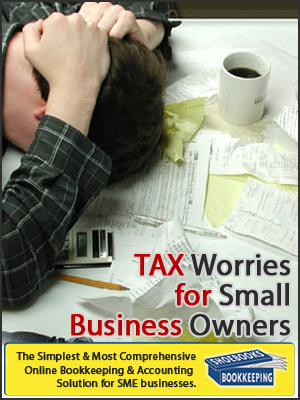
Tax Worries for Small Business Owners

Tax Worries for Small Business Owners
New figures indicate small business owners are anxious about tax time.

A massive 91 per cent of new small business owners have very little understanding of their annual tax obligations, while 84 per cent are unsure of the things they can claim as a business expense. This was revealed by the American Express Tax Time Survey.

According to Jason Fryer, head of small business services at American Express, understanding GST and the consequences of making a mistake cause a lot of worry amongst small business owners.

“Setting up your own business can be like jumping into the unknown. Our Tax Time Survey shows that completing the business tax return for the first time is often fraught with anxiety,” he said.

“The research shows that almost all new business owners wonder at some stage if they have complied with the latest tax legislation and whether they will fall foul of the tax office if they make a mistake,” Fryer added.

From the more than 500 Australian businesses that were surveyed by Galaxy Research, it was found out that 74 per cent of operators find it a burden to complete their business activity statements. The results further revealed that aside from cash flow management, tax related issues are also considered stressful for many business owners.

Taxation expert and author Adrian Raftery says, “The American Express research reveals considerable uncertainty among small business owners about tax reporting and what they can and can’t claim, which contributes to negative feelings about completing tax returns.”

“In fact, the two most common questions I am asked by small business owners at tax time are, ‘what is the likelihood of my business being audited?’ and ‘who are the ATO targeting this year?’ – demonstrating the level of concern among business owners,” he added.

American Express suggested to help relieve taxation stress of business owners that they should keep receipts and use one business card in order to keep personal and office spending organized.

Source: The Shout »

Thursday, June 23, 2011

Cash Flow Problems of Small Businesses in Australia

Research has shown that the biggest challenge of small businesses today is cash flow. Delinquent accounts increased by 20 per cent in the March quarter with payments over 90 days late.

This problem has been caused by customers delaying payments. The situation is compounded as the government incentives of 2009-2010 have already ended before the economy has reached the level required by small businesses to survive. To add to the problem, the natural disasters in Queensland and Victoria had adverse effects on small businesses in parts of Australia.

On a national perspective, the difficulty of small businesses is not reflected as it is heavily influenced by the mining industry’s momentum.

Here are possible solutions for small business owners.

Mark O’Donoghue, Finlease Finance Broker, said that it would help to talk to a specialist business broker. The advice of a specialist is free and offers practical solutions.

“One readymade solution is debtor finance. This is a facility that can fund your receivables which you may not otherwise be able to recoup from your customers for weeks or months. In other words, the finance pays your bills so that you can meet your ongoing commitments to keep running your business efficiently. You’ll receive up to 80 percent of your invoice, eliminate the immediate hassle of collecting payments and will be able to fund current operations without incurring further debt,” he added.

Another practical solution is to encourage customers to pay in advance and then give them discounts when they do so. And for those customers who are the worst payers offering them a big discount to pay promptly can help ease the situation.

Source: DynamicBusiness.com.au »

Thursday, June 16, 2011

Comparing Planning and Accounting - Why is it Important?

Planning vs. Accounting
The 1994 movie, Stargate, represented a gate that led to two dimensions. In today’s time, the stargate opens to accounting on one end and planning on the other.

Accounting starts today and goes back to records of the past with increasing detail. Planning, on the other hand, starts today and heads straight to the future with increasing summary and aggregation.

However, many find the two to have similar looking tables. The accounting system has an income statement, a balance sheet, and a Cash Flow statement. The business plan has these three statements “proforma” or projected results. Although these three statements are almost identical in form, presentation, and order of appearance, the information they carry are not the same.

This conceptual difference is important as they don’t mix well. Planning approached from an accounting point of view is not good. Accounting is done by reporting from a database of transactions.

Planning is steering the business to a future direction. Planning is concerned with decision-making, progress tracking and change management. Though accounting is also about information and management, there are legal considerations related to it. Accounting also has to go into very deep into detailing while planning requires balance between concept and detail. There are times when too much detail is not productive.

Accounting has to be accurate. There is no room for mistakes and errors. This is because taxes and dues to the government are derived from the figures. Planning, however, can be wrong. In fact, it is often wrong. There is always room and chance for corrections. This is because it deals with assumptions that aim to steer the company to a certain direction. And assumptions need constant reconstruction until the best direction is achieved by a company.

Article Source: Business Insider - Planning vs. Accounting: 2 Different Dimensions. And Why You Care »

Tuesday, June 14, 2011

Pay for Finance and Accounting Practitioners Rises

Higher pay rises for finance and accounting practitioners
One of the highest pay increases across the board of 4.1 per cent has been taken by practitioners of finance and accounting.

However, it has been found that while finance and accounting job families enjoy being on the high end of the pay increase spectrum, the wider finance, banking and insurance industry have been seen to have underperformed during the last financial year. This was according to the Australian Institute of Management’s National Salary of 2011.

Compared to the Australian average of 4 per cent in increase, the industry sector only managed an average pay increase of 3.62 per cent in 2010-2011. It is also the only industry sectors that recorded lower salary movements.

However, it is seen that this will rise to 3.79 per cent in the coming financial year. This will bring the industry back in line with other sectors.

Large companies have also been found out to be willing to hire staff from overseas to overcome skills shortages.

In large companies, migrant workers are currently being recruited for 12.9 per cent for finance and accounting jobs. Small companies, on the other recruit 15.2 per cent migrant workers.

The voluntary staff turnover for large companies has increased from 10.3 to 12.6 per cent. This shows that workers are already willing to risk changing employers.

News Source: MoneyManagement.com.au »

Sunday, June 12, 2011

COSBOA Warns Minimum Wage Increase Will Hurt Small Business

Minimum Wage Hike and its effect on Small Businesses
COSBOA, or the Council of Small Business of Australia, has given a warning that the upcoming minimum wage increase will definitely hurt small businesses.

Fair Work Australia has lifted the minimum wage from $569.90 to $589.30 per week last Friday (3rd June). The increase of $19.40 per week has come midway between the union’s call for a $28-rise per week and the business bodies’ call of a $10 increase. COSBOA is among the business bodies.

According to COSBOA executive director Peter Strong, the ruling is a pay decrease for small businesses even if employees are a getting a pay increase.

“People need more money and we understand that, but small businesses don't get a lot of money,” said Strong. “At the moment, small business is a lot of hard work. We're just here to make a living and it impacts on small business owners' family income,” he added.

COSBOA (Council of Small Business of Australia)
It was also said that the government cannot give any more money to small businesses. However, it can help them by giving them more tax breaks. The government can also help by removing red tape. GST and superannuation payments should also be looked at.

Around 1.4 million workers will be affected by the Fair Work ruling that will take effect on July. This ruling amounts to 3.4% rise above inflation.

After the Australian Chamber of Commerce and Industry (ACCI) initially lobbied for a $9.50 weekly increase, it said that the ruling is excessive.

The wage increase will add another $3 billion to the wages bill of small businesses of Australia, according to ACCI Chief Executive, Heather Ridout.

“While not wanting to overstate the risks, it has to be said that in the current circumstances faced by non-mining, trade-exposed sectors such as manufacturing and tourism, the decision is sure to further erode margins and will weigh against decisions over retentions and new hiring,” she added.

News Source: SmartCompany.com.au »

Wednesday, June 8, 2011

Super Coalition Plan Welcomed by Small Business

The Coalition’s plans for the tax office to process superannuation payments on behalf of small business have been welcome by the Council of Small Business Organizations of Australia (COSBOA). This proposal has been dubbed as the “first real removal of red tape for the sector in memory.”

The coalition proposes that small businesses will be allowed to transfer its total employee entitlements to the Australian Taxation office and the Taxation Office will distribute the payments to the relevant super funds.

According to COSBOA Executive Director, Peter Strong, this proposal will save time, effort and money for SME’s.

“It's so sensible; there are no losers. We've been pushing this for years,” says Strong.

Furthermore, Strong says that the government’s current superannuation clearing house is a “good thing”. However, it is not easy to engage and the businesses that are best suited to it are just too busy to try it.

The system, according to the government, is simple, free, and available to companies with less than 20 employees. There have already been 4,356 who have signed up with the clearing house as of June 3. Around 28,855 employees have been added to the system while 84,025 employee payments have been made.

“People would say that's not much, but it's my time,” says Strong.

“Super is one of the biggest problems when employing somebody: who are they a member of and becoming a kind of financial adviser by having a default fund in place,” Strong adds.

Small Business Minister, Nick Sherry, says that the Coalition would stop mindlessly opposing their tax cuts for two million small businesses if it truly cared for them.

“Today's announcement by Tony Abbott is just more empty and hollow words, which can't be believed,” said Sherry.

News Source: Smart Company »

Wednesday, June 1, 2011

Small Businesses Now More Willing To Borrow

Small Businesses are more eager to loan from banks
There is more willingness on the part of small businesses to borrow. This is due to increased competition amongst the banks. A significant boost to the big four’s loan books may not show for a few months yet.

Businesses of all sizes have shown their willingness to borrow over a 12-month horizon since November 2010. However, research firm, DBM consultants reported on Tuesday that expectations declined in April for all except for the smallest micro-sized enterprises.

These micro-sized enterprises represent 89 per cent of all Australian businesses of which 39 per cent of them do not have loans. Furthermore, they have annual leftovers of less than $1 million. Those with annual turnovers of around $200,000 are expecting to change their debt levels over the next 12 months.

Sentiment was assessed and found to be strongest amongst miners, insurers, and other financial services firms. The weakest, on the other hand, is among those in retail, agriculture, tourism and construction sectors.

DBM has been commissioned by the four banks to conduct surveys. Among the top concerns listed by all businesses are rising interest rates and business costs.

John Hinchy, DBM’s Chief Statistician, describes the mismatch between borrowing expectations and business sentiment for micro-sized businesses as a conundrum.

However, Colin Whitehead of Fat Prophet says this observation is probably because businesses want to borrow in order to plug their cash flow problems.

He also stated that the competition among lenders to win business loans is driving these small businesses to increase their borrowings. “The banks are competing more actively in that space, therefore they are likely to improve the terms,” said Whitehead.

The top end of town only represents 0.3 per cent of Australian businesses, but it covers about 40 per cent of all Australian borrowings. Meanwhile, small businesses only account for 15 per cent of all Australian borrowings.

Monday, May 30, 2011

Turn Your Business Into a Franchise

Turn your business into a franchise.
According to Wikipedia, a small business is a business that is privately owned and operated, with a small number of employees and relatively low volume of sales. Small businesses are normally privately owned corporations, partnerships, or sole proprietorship. However, any small business need not stop at this level. There could be a chance that this will work out for another person or group in the form of a franchised agreement.

Franchising, on the other hand, is practicing another company’s or firm’s business model based on terms and conditions or an agreement.

So here are 10 questions that must be asked to know if a business is good for franchising.

1. Is your business really successful-and different?

It has to be proven that your business has been successful throughout the years and has a good track record. It also has to be made sure that there are is solid evidence supporting this claim.

A business also has to be different and unique in order to catch a wide market base.

2. Could that success be replicated?

A franchisee should not need to acquire new specialized skills but rather be able to apply the systems and methods provided to reproduce the successful operation of the business.

3. Do you have a standout brand?

This is important because franchisees would want a company that already has an established name and a high-level recognition in the market.

4. Do you have detailed, tested business systems?

A franchisee would want to know if all the elements or components of the business are already in place. They should not want have to work things out for themselves.

5. Can your business continue to adapt, evolve, and grow?

Handling a business also means being able to constantly adapt to the changes and challenges around. Competition and new market conditions can destroy even successful companies if they do not adapt.

6. Have you got the necessary skills and attitudes?

Famous business franchises
Being in a business is a tough job to do. When you attempt to extend running your business to running a franchise groups additional skills have to be developed. For example communication skills will be required to train the franchisees.

7. Can you create a realistic market plan?

It is important for the business owner to hire professionals to help in the marketing plan. Since the company is looking for possible franchisees, it is important to be ready with the marketing plan that will help convince possible franchisees. This may include having to promote the franchise brand, help franchisees market their individual businesses and market the company’s franchise offer to possible franchisees.

8. As a franchiser, can you keep adding value to the businesses?

Being a franchiser does not mean staying confident, complacent and relaxed the whole time expecting the money to keep rolling in. Remember that competition always has changing trends and the franchiser has to develop and refine their business model to stay ahead.

9. Will you have adequate financial reserves?

Make sure the company has financial reserves in place to support franchisees in the initial stages.

10. Do you have access to specialist franchising expertise?

The franchiser has to make sure that the company has access to specialist franchising expertise. Franchising involves complex legalities which may be difficult to handle for the business owner themselves. Expert advice is the best option to yield the best results.

Franchising is not a simple thing. It involves larger management coverage and should therefore be well thought through before being undertaken.

Thursday, May 26, 2011

Australian Business Burdens Set To Be Made Easier

The Productivity Commission has been tasked by the Australian Federal government to undertake a study that aims to make businesses easier to operate.

The study will address regulatory reform opportunities and evaluate reform outcomes.

This study will replace the commission’s fifth annual review of regulatory burdens on businesses, seek public submissions and in six months will have to report back to the government.

According to Nick Sherry, the minister assisting on deregulation, a key driver of productivity growth is the ongoing regulatory reform which is being recognized by the Gillard government.

“That is why we have embedded regulatory reform as a core government activity, with a comprehensive agenda aimed at reducing red tape for businesses of all sizes,” said Sherry.

“We are driving this reform process both at a national level through COAG (the Council of Australian Governments) and at a commonwealth level through better regulation ministerial partnerships,” he added.

Identifying regulatory reform opportunities and priorities, as well as evaluating regulation reform outcomes will be targeted by the study. Furthermore, lessons gathered from Australia and overseas will also be examined.

These lessons will be the basis for analyzing possible frameworks in order to identify those areas performing poorly.


“Good regulatory reform relies on effectively identifying reform opportunities in order to prioritize the allocation of resources to areas of the highest likely benefit,” said Sherry.

According to the Organization for Economic Cooperation and Development, Australia was one of the front-running countries in February 2010 in terms of its regulatory reform practices.

“The Gillard government is determined to build on this impressive record, by maintaining the momentum of regulatory reform and making it easier for Australian businesses to operate,” said Sherry.

News Source: Sydney Morning Herald »

Tuesday, May 24, 2011

New Small Business Tribunal Created To Resolve Disputes

In an effort to speed up resolutions to small business disputes and to minimize costs incurred by small businesses involved, a new national small business tribunal has been created by the Australian government.

Nick Sherry, Federal Minister for Small Business, was the one who proposed this tribunal option in an options paper that was released.

The following key ideas are contained in the paper:

1. A National Information and Referral Service - this includes a website and a telephone line that directs small businesses to other services in their area.

2. A National Dispute Resolution Service - will provide referrals and information and offer low-cost mediation.

3. A National Small Business Tribunal - will deal with small business disputes backed by Commonwealth legislation.

4. A Small Business Advocate - would independently represent the interests of small businesses to the Australian government.

According to Sherry, the small business tribunal will serve as a “one-stop shop” for disputes and will be backed up by commonwealth legislation.

It has been found out that one in five small businesses, or about 20 per cent of Australia’s 2 million small businesses, had been involved in a dispute with another small business in the past five years according to the survey conducted by the Department of Innovation, Industry, Science and Research (DIISR). Around 2/3 of these cases were payment-related while around 9 per cent were serious.

It was also further found out that many small businesses did not know where to go with the disputes. However, if they knew, they also hesitated due to financial concerns.

"My aim is to bring about a national business-to-business disputes resolution process that is accessible, prompt and as low cost as possible for small businesses," Sherry said.

He added that the aim of the tribunal is to keep disputes out of court especially those small business disputes that only require low-cost and speedy services.

News sources: Smart Company | Sydney Morning Herald | Herald Sun | Queensland Business Review

Monday, May 23, 2011

ACCI says Small Business Confidence Stays Weak

A business lobby group says that the confidence in small businesses has remained weak. This is primarily because of the high Australian dollar and the likelihood that interest rates will be raised.

The index for business conditions was 43.8 points in the March quarter which is only higher by 0.1 compared to the previous period. This was revealed in the small business survey by the Australian Chamber of Commerce and Industry or ACCI. Figures below 50 indicate a contraction in the economic conditions of small businesses.

They had expected a better performance of 49.3 index points.

"Over the March quarter, most small business growth indicators and confidence have continued their declining trend amid the strong Australian dollar, the prospect of rising interest rates and taxes and continued global uncertainties," said Greg Evans in a statement on Tuesday. Evans is the ACCI Director of Economics and Industry Policy.

Furthermore, he said that "The survey also highlights that small business performance continued to fall significantly behind its larger counterparts."

Only wage growth and non-wage labor costs rated above 50 points while 6 of ten components in the survey fell during the quarter.

According to Mr. Evans, the federal budget did not alleviate the costs of doing business in the near term and that disappointed the sector.

"Instead, some measures in the budget will negatively affect their sales and increase taxes payable in certain circumstances. The possibility of further increases in interest rates over the next few months, impending higher energy costs and the possibility of across the board minimum wage increases will further impact on small business profitability and viability," he said.

Most indicators of the survey indicate conditions will be better in the June quarter.

News Source: Sydney Morning Herald »

Wednesday, May 18, 2011

Survey Indicates Good Times Ahead for Businesses

Tough weather and economic conditions may have hit Queensland earlier this year, but a recent survey says Queensland’s businesses remain upbeat.

Although Queensland was found to be below the national average in terms of “happiness”, its outlook is positive. This was according to Westpac’s Local Business Sentiment Survey.

“What we found interesting was that even though Queensland is doing it especially tough it registered a happiness score of 58, just under the national average,” said Westpac General Manager SME Segment Sian Lewis. “This shows a particular resilience in the Queensland business community – I would have expected them to be a little more off the pace,” he added.

Queensland, Tasmania, and the Northern Territory all ranked under the national level but small businesses in Victoria, Western Australia, and the ACT ranked more than 60 in the “happiness index” of businesses in Australia.

Another result from the survey was that 2 out of 3 Australian businesses indicated that “business is good” and that 57 per cent of those surveyed say that a stronger performance may be expected in the next six months.

While the biggest headaches of small businesses are managing business costs, driving sales, and employee performance, the positive factors included positive customer relationships, meeting personal goals, and strong operational performance.

Local business forecasts remain positive even with the recent financial and natural disasters that hit Australia.

Profit targets are expected to be met by more than half of all small businesses in Australia and 25 per cent thought their businesses were likely to do better than expected.

There were 2500 answers from respondents coming from Westpac’s business customers that were collated for the survey.

News Source: Queensland Business Review »

Monday, May 16, 2011

$5000 Tax Write-off For Australian Small Businesses

Realizing that small business operators are going through tough times with this current economy, the Australian government is giving an instant tax write-off of the first $5000 of any motor vehicle purchased from 2012 to 2013. This offer is intended for small business operators. This is because small businesses comprise 96 per cent of Australian businesses and are the backbone of the Australian economy as stated by Treasurer Wayne Swan.

Of Australia’s 2.7 million small businesses, it is the motor vehicle that is the main capital item. This offer will certainly improve cash flow and help business owners expand and reinvest.

This measure is seen as a part of the government’s tax reform programs that are to be introduced in 2012 to 2013 that will provide a write off on all assets that are valued at below $5000. The measure is estimated to cost $1.7 billion over the forward estimates.

Currently there are two depreciation pools with different depreciation rates. There is also planned a reduction in company tax rate to 29 per cent for small businesses.

These tax reforms will be available to all types of small businesses including sole traders. Businesses operating through trusts, partnerships, and companies are also eligible.

This new measure replaces the Entrepreneurs Tax Offset. It was recommended to be abolished by Australia’s Future Tax System Review (AFTSR) due to its high compliance cost and poor targeting. It concluded that the ETO is a disincentive for small businesses.

Since the ETO was only available to small business with turnover of less than $75000, there are 2.3 million small businesses that were not able to utilize the of benefit.

News and Image from: International Business Times »

Monday, May 9, 2011

Response for SME Accounting Standards Beyond Expectation

Roger Marshall
According to Roger Marshall, Accounting Standards Board Chairman, there are more than 200 responses received for the consultation on International Accounting Standards for SMEs. He noted that “this is more than expected, although not much more.”

Marshall added that there were “no huge surprises” because of the level of consultation that was held during the past few months. He continued to say that it will also take some time to digest all the contributions.

The respondents were concerned mainly on the efforts to simplify the FRSME. This can be done by removing some of the options available under the full IFRS. Revaluation and development cost capitalization are included in the options. These are of particular concern to small groups and housing organizations.

According to Marshall, another point of contention involves the distinction between the users of FRSME and the users of the full IFRS. Pension funds, among others, are questioning why they are forced to use the more complex standards. They insist on sticking to the simpler rulebook.

As the ASB shall be working on responses, updates will be posted online. According to Marshall, it may take until autumn to examine all the themes but a full report will be available in late 2011.

News and Image Source: Accountancy Age »

Thursday, May 5, 2011

SME Confidence Now Back Despite Worsening Conditions

The National Australia Bank’s SME Quarterly Survey for the March Quarter has shown that the confidence of Small to Medium-sized enterprises is back after the floods that occurred last December and January.

Demand was the only constraint to SME’s that had a significant rise. Borrowing costs, staffing, global economic uncertainty, and cash flow were considered less significant constraints on long-term decision making in the March quarter.

There are signs of optimism that are seen but it is still a challenging time for SME’s. This is according to NAB Business Australia Executive General Manager, Daryl Johnson.

“During the March quarter, SME confidence levels were up from five to eight (index) points, with all SME industries returning to positive territory,” Mr. Johnson added.

He said that “this suggests they are more optimistic about future conditions and are looking forward to the post-flood recovery period. Despite this optimism, SME business conditions have remained on a gradual decline from the post-GFC peak in December 2009, pushed down again by the recent floods that are estimated to have reduced national business revenues by 5 per cent in January.”

Western Australia and Victoria recorded the highest levels of confidence for the second consecutive quarter. Confidence levels are positive across each state. However, business conditions deteriorated in all major states except for South Australia. Queensland, on the other hand, has the largest deterioration while Victoria has the strongest.

“Fifty eight per cent of SMEs report that sales and orders are a more constraining factor on output than finding suitable labour (45 per cent). Regarding profitability, 40 per cent of SMEs surveyed believe demand remains the most significant profitability constraint in the next 12 months, while availability of suitable labour (13), wage costs (11) and interest rates (8) were less significant,” Mr. Johnson said.

The survey revealed that industry-wise, the strongest was business services and finance whilst the weakest was construction and retail.

News and Image from: International Business Times »

Tuesday, May 3, 2011

Accounting Software: Essential For Every Business

Accounting Software plays a vital role in business owner’s ability to stay on top of their companies finances.

The Planning Shop President, Rhonda Abrams, shared with USA Today that managing money should be viewed by entrepreneurs as just as important as making profits. She emphasized that the use of accounting software will assist greatly in achieving this. Accounting systems keep track of accounting records far better and much easier than manual methods.

Accounting software also allows businesses to examine trends and make projections. Abrams also advised the importance that bills and invoices are dealt with on time, to keep a reserve of money from major deals and to limit the credit offered to individual clients.

Ms Abrams added that, “A few simple steps and you'll be on your way to an excellent credit rating, a great relationship with a bank and a good night's sleep.”

It can also be noted that last month, accountancy expert and author, Karla Dennis, told Entrepreneur Magazine that accounting software helps eliminate avoidable tax errors.

News and Image Source: CodeStone.net »

Monday, May 2, 2011

Why You Should Learn Accounting

Every business is started with money, time, and effort. Therefore, like a flower, it needs to be nurtured, cared for, and showered with attention. Everything has to be done in order to ensure that it grows and matures and eventually, bloom and bear fruit. If the opposite is done, the business will go down the drain.

That is why it is very important for a business owner to take matters seriously and understand the reasons why one has to be familiar of the business. Here are a few tips of what the business owner must do in order to ensure the life of the business.

First thing is that the owner should really learn the basics of accounting. Terms such as accounts receivable and accounts payable, accrual and cash basis, and others have to be familiar to the business owner.

Another thing to remember is that the owner should deal with the situation of the business at face value. Issues and problems should not be set aside or just assigned to any employee. By not doing so, the owner will not only see the problems but also the advantages and potentials for growth of the business. The fear of not being able to comprehend the figures is only going to last the first few days. When you’ve gotten the feel of the business, everything will fall into place.

Money matters should not just be put on the shoulders of the company’s accountant. If there is one who should know everything, it should be the owner. Letting the accountant have the key to everything could promote or encourage conspiracy and put your business in jeopardy. That is the reason why there are celebrities and professionals who end up crying in public because their accountants have fled with their money. Also, when there are discrepancies in the taxes paid to the government, it is the business owner who is chased and not the accountant.

CBA: Business Credit Not Yet Seen To Go Up

This year is not the time for business credit to surge. This has been seen especially with the country’s biggest lender stating that the “engine drivers” of economic growth are not borrowing cash but are holding on to it.

The major banks’ prediction of a sizeable rebound in lending to small and medium sized enterprises, and the pickup of the number of loans given to companies in the 2 million or less category in September 2010 gave the industry hope of a sustained recovery especially with the increased demand from small businesses. However, these hopes have been stalled by a subdued retail sector and the natural disasters in Queensland, New South Wales, and Victoria.

Business lending in February, according to APRA, increased by 0.6 per cent which worked out at an annual growth rate of 7.2 per cent. This was considered by Deutsche Bank analyst, James Freeman, as a significant rebound.

National Australia Bank leads the charge followed by ANZ and CommBank. Behind them is Westpac. In the regional sector, Bendigo takes the lead. BoQ declared that its lending to the SME sector for the six months up to the 28th of February increased slightly from $100 million to $5.3 billion.

While Deutsche Bank suggests on not dwelling too much on February lending figures, CommBank also said that there had been a slow start to business lending in the first three months of the year 2011.

The bank said that “while there has been some pick-up in activity, we don't expect a boom. This is largely due to the number of businesses sitting on more cash. Instead, we expect growth levels to be steady over the remainder of the year.”

News Source: Sydney Morning Herald »
Image: Travel-Australia.org »

Wednesday, April 20, 2011

SME Feedback Does Not Reflect Accounting Standard Concerns

The SME feedback is said not to contain the housing association’s concern about the dangers of switching to international financial reporting standards.

Chairman of the Accounting Standards Board or ASB, Roger Marshall, is quick to defend that such inconsistency means that there is a need for further discussions. He further revealed his plans of meeting up with the housing association trade bodies after the consultation closes on April 30.

The affordable home providers’ concern is that transferring to IFRS means 100 million Euros in red tape. Furthermore, they told the Financial Times that it could also wipe 1 billion Euros off the current value of assets.

Other concerns include property revaluation. According to the proposed IFRS for SME, this revaluation is not allowed. This has caused fear among landlords that their equity might be slashed which would eventually lead to problems with existing banking covenants.

Another concern presented by housing associations and companies connected to construction is the capitalization of borrowing costs. Companies with properties that are being developed were able to roll the cost of borrowing into the project under the UK GAAP which has kept their balance sheets healthier.

Marshall says that the ASB is still listening to all concerns and is going to take all into consideration. He said that his being a former housing association treasurer makes him fit to deal with relevant issues. He further stated that the ASB will wait for all concerns, responses, and issues to come before it moves on to the next step.

News & Image Source: AccountancyAge.com »